Why do we use plastics that last for centuries for jobs that take minutes? That is the question behind every material we design. We call the answer the great material mismatch: not one mismatch, but millions.
What is a material mismatch?
Most of the plastics around us were discovered almost a century ago. They found their way into applications that nobody questions anymore. They are strong, cheap and durable. Durable is exactly the problem when the job is short.
Take a street sweeper’s brush. Its bristles wear down by using them, every day, on every street. What wears off ends up somewhere. Take a thin guide tube that positions a fibre-optic cable during installation. Its job lasts minutes. If it has no protective role afterwards, why put a material in the ground that may outlive the house it serves? Take the film around a dishwasher tablet. It dissolves, so the job seems done. But dissolving is not the same as biodegrading and bringing it back into the cycle.
Three examples. There are a million minus three still waiting.
This is not a case against plastics. A water pipe or a wind turbine blade should last a long time. The point is simpler: every material should be designed for its function, its service life and its responsible end.
Material cost vs end-of-life cost: why price per kilogram is half the calculation
We compare materials by price per kilogram. That figure covers the start of a material’s life. The end of its life rarely appears on the quote: collection, cleanup, wastewater treatment, soil remediation, emissions.
Whoever calculates the price per kilogram alone, and keeps the costs at the end out of sight, is calculating with someone else’s wallet. And with that of the generations after us.
What is expensive: a better material, or cleaning up the wrong choice for centuries?
The European chemical industry: between museum and demolition
Europe’s chemical industry is under pressure. Energy prices, regulation and global competition weigh on it, and plants are closing. The easy conclusion is that (chemical) industry is leaving Europe.
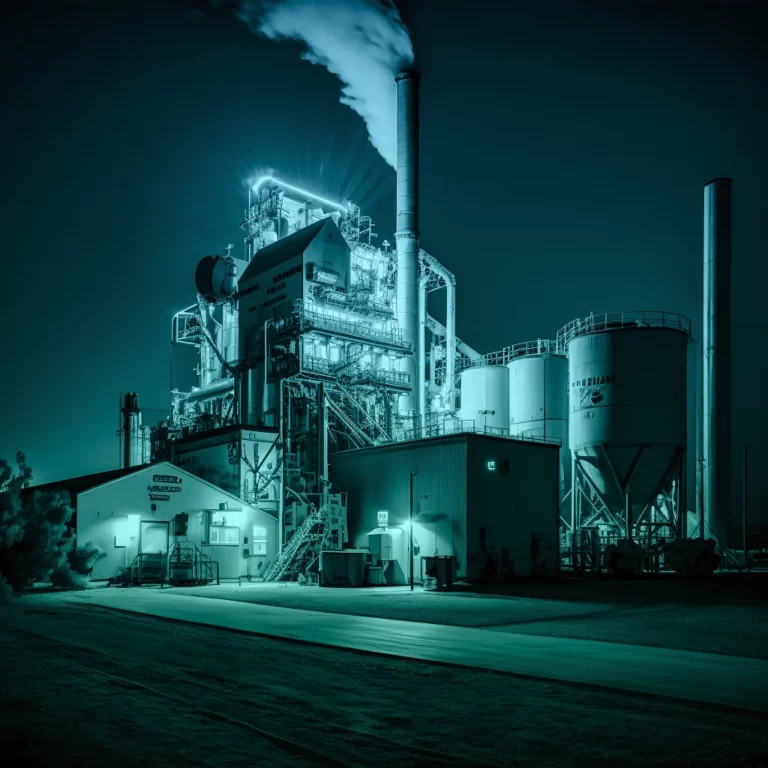
Old factories can be a birthplace for new materials.
But every plant that closes takes skilled people, permits, infrastructure, and supply chains with it. The better question is not only how to keep yesterday’s chemistry alive. It is which materials we want to make here in ten or twenty years, and which existing installations, knowledge and people can make them.
Some installations can, with limited or more fundamental adaptations, run new raw materials and processes. That makes old factories more than a museum piece. It makes them a birthplace for new materials.
Biobased materials made in existing chemical plants
I spent years at DSM working on biobased building blocks, at the crossover of life sciences and materials. The lesson of that period: new materials take longer than the young expect and less long than the veterans fear. They come from combinations that do not usually sit at the same table. Old factories with new (bio)chemistry. Old experience with young impatience.
That is why B4Plastics works as a polymer architecture company. We design polymer backbones from biobased building blocks, with a lifespan matched to the application. Through our Licensing House we bring those processes to manufacturers who already have the equipment.
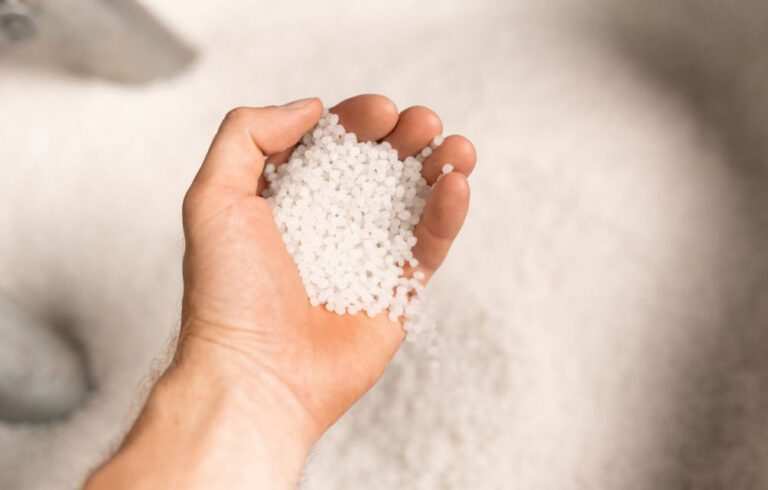
Polymer granules: where a product’s material begins.
Biobased plastics in 2050: a fast forward
Imagine 2050. The film around the dishwasher tablet comes from local biomass and returns safely to the cycle after washing. The temporary duct for fast internet has done its job and is gone. The street sweeper still cleans the street, without spreading persistent particles while doing so.
Fossil plastics have not disappeared. They are used where their durability matters. The rest is in the museum.
To green or not to be was the question. We chose to be.
Working on a product whose material might not match its job? Talk to our Licensing House about what lifespan it really needs.
Read next: related guides on materials and lifespan
FAQ: material mismatch and biobased plastics
What is a material mismatch? A material mismatch is a product whose material lasts much longer, or much shorter, than its function needs. A single-use item made from a material that persists for decades is the typical example.
Does B4Plastics want to replace all plastics? No. Durable plastics belong where durability matters, such as pipes and structural parts. The aim is to match each material’s lifespan to its job.
Can existing chemical plants make new biobased materials? Some can, with adaptations. Which ones depends on the process, the raw materials and the equipment. That assessment is part of every licensing conversation.